The Chronicles

Explore the visual tales and untold secrets of Egypt's timeless heritage

Explore The Legacy

Tourism Escape

Discover luxury hotels and exclusive tours across ancient Egypt.

View Experiences

Your Journey
Through Ancient

Like Horemheb, the last great pharaoh of the 18th Dynasty, we invite you to command your own path. Our VIP travel experiences blend the majesty of Egypt's timeless history with the utmost modern luxury.

From securing your stay at Cairo's finest 5-star hotels and private Nile-view apartments to arranging private Egyptologist guides and chauffeur-driven vehicles — every detail is meticulously crafted. Walk where Horemheb once ruled, and let us transform your Egyptian dream into an unforgettable reality.

Explore Our Tours
Luxury travel Egypt

Ancient Temples

Explore the majestic and sacred temples of ancient Egypt.

Explore Temples

Horemheb Mummy: Secrets Of The Missing Egyptian King

Horemheb Mummy: Secrets Of The Missing Egyptian King

The lost mummy of King Horemheb conceptual archaeological discovery

The narrative of the Eighteenth Dynasty of ancient Egypt is defined by unprecedented wealth, military expansion, and dramatic religious revolution. Yet, the final chapter of this golden age is shrouded in a profound archaeological mystery. King Horemheb, the brilliant military commander who ascended to the throne and restored traditional Egyptian order after the chaotic Amarna period, vanished into history. While his monumental architectural legacy remains visible at Karnak and Luxor, the actual royal mummy of Horemheb has never been definitively identified. He is the last great missing pharaoh of his era.

Unlike Tutankhamun, whose intact burial provided a wealth of physiological data, Horemheb's afterlife journey was violently interrupted by ancient tomb robbers. The quest to locate his remains has puzzled Egyptologists for over a century. This comprehensive analysis explores the historical context of his reign, the discovery of his violated royal tomb, the skeletal fragments left behind, and the ongoing scientific search for the man who saved the Egyptian empire from collapse.

Statue Of King Horemheb

Ancient pharaonic statue of King Horemheb seated with deities

Before examining his missing remains, it is crucial to understand the physical and historical profile of the man. Horemheb was not born of royal blood. He began his career as a scribe and military officer, eventually rising to the rank of Great Commander of the Army under King Tutankhamun. The statues carved during his lifetime depict a man of stern authority, muscular build, and traditional features. He was the pragmatic force behind the throne during the post-Amarna restoration, orchestrating military campaigns in the Levant and Nubia.

Archaeological Note: Horemheb's pre-royal statues often depict him with the scribe's palette, emphasizing intellect and administration over brute force—a highly unusual and deliberate propaganda choice for a military general who would eventually become Pharaoh.

When Horemheb eventually claimed the throne, he initiated a systematic campaign to erase the legacy of the "heretic king" Akhenaten. He dismantled Amarna-era structures and usurped the monuments of his immediate predecessors, carving his own cartouches over those of Tutankhamun and Ay. His statues reflect this transition from a humble general to a divine ruler, often depicting him alongside the god Horus or seated in traditional pharaonic majesty. These stone representations are currently the closest artifacts we have to understanding his physical presence.

  • Origin: Non-royal birth, rose through military ranks.
  • Key Role: Great Commander under Tutankhamun, orchestrated post-Amarna restoration.
  • Depiction: Often shown with a scribe's palette, emphasizing intellect.
  • Legacy: Erased Amarna-era structures, usurped predecessors' monuments.

Horemheb Tomb Kings Valley

Entrance and descending corridor of Horemheb tomb in the Valley of the Kings

The search for Horemheb reached a pivotal moment in 1908 when young British Egyptologist Edward Ayrton, working under the sponsorship of Theodore M. Davis, discovered Tomb KV57 in the Valley of the Kings. The tomb's entrance had been buried under debris from subsequent excavations, hiding it from modern explorers. When Ayrton breached the final sealed doorway, he uncovered one of the most architecturally significant tombs in the royal necropolis.

Architectural Shift: Tomb KV57 represents the exact moment Egyptian tomb design evolved. The introduction of the straight, deeper descending corridors was designed to symbolize the sun god's direct journey into the underworld, setting the standard for the 19th and 20th Dynasties.

KV57 marks a critical transition in royal tomb design. It abandoned the bent-axis layout of earlier Eighteenth Dynasty tombs in favor of a straight-axis orientation, a stylistic choice that would dominate the Ramesside period. The walls were decorated with exquisite painted bas-reliefs illustrating the Book of Gates, replacing the simpler Amduat texts used by his predecessors. However, the excitement of the architectural discovery was immediately dampened by the realization that the tomb had been thoroughly ransacked in antiquity.

  • Location: Valley of the Kings (East Valley), Thebes.
  • Discovered By: Edward Ayrton (1908).
  • Architectural Style: First straight-axis royal tomb.
  • Current Status: Open to the public, features unfinished murals.

Red Granite Horemheb Sarcophagus

Massive red granite sarcophagus of Horemheb with carved protective deities

At the center of the sunken burial chamber in KV57 lies the magnificent red granite sarcophagus of King Horemheb. It is considered a masterpiece of late Eighteenth Dynasty stonework. The corners of the monumental box are carved in high relief with the figures of four protective goddesses: Isis, Nephthys, Neith, and Selket. Their wings are outstretched, wrapping around the massive stone to protect the pharaoh for eternity.

Symbolism in Stone: The four winged goddesses carved into the corners of the sarcophagus were strategically positioned not just for decoration, but as magical sentinels intended to guard the internal organs and shield the physical body from spiritual decay.

Despite its imposing presence, the sarcophagus had not fulfilled its primary purpose. When Ayrton illuminated the burial chamber, he found the heavy granite lid broken and cast aside. The ancient looters had smashed through the protective layers to extract the golden amulets and jewelry wrapped within the royal mummy. The deliberate destruction of the lid indicates that the robbery occurred during a period of severe economic instability, likely during the late Twentieth Dynasty, when state-sanctioned tomb dismantling became a grim reality in Thebes.

  • Material: Solid Red Granite (Aswan).
  • Key Decoration: Four protective winged goddesses at the corners.
  • Condition: Sarcophagus intact, lid shattered by ancient looters.
  • Contents Found: Intrusive skeletal remains (not the King).
Tomb Feature KV57 (Valley of the Kings) Significance in Egyptology
Tomb Axis Straight-axis design First of its kind, setting the standard for the 19th and 20th Dynasties.
Wall Decorations Painted Bas-reliefs (Book of Gates) Moved away from the stick-figure style of the Amduat to highly detailed reliefs.
Sarcophagus Red Granite with protective winged deities Exceptional craftsmanship; lid broken by ancient looters.
Completion Status Unfinished in several chambers Shows the exact process of ancient Egyptian tomb painting and carving.

Missing Pharaoh Mummies Egypt

Collection of unidentified missing pharaoh mummies in Egyptian museum archives

The absence of Horemheb's body from his sarcophagus is part of a larger, systemic phenomenon of missing pharaonic mummies. By the end of the New Kingdom, the Valley of the Kings was no longer secure. Widespread corruption, economic collapse, and repeated incursions by Libyan marauders led to organized pillaging of the royal necropolis. In response, the high priests of Amun during the Twenty-First Dynasty initiated a massive relocation project.

Historical Context: The systematic moving of royal mummies during the 21st Dynasty wasn't just to protect them from robbers. It was also a state-sponsored effort to recycle the massive amounts of buried gold to fund a fractured and bankrupt nation.

Two major caches were discovered in the late 19th century: DB320 at Deir el-Bahari and the side chambers of Amenhotep II's tomb (KV35). These caches yielded the spectacular remains of Ramses the Great, Seti I, Thutmose III, and Ahmose I. However, Horemheb was notably absent from both locations. Historians speculate that his mummy may have been destroyed entirely by the initial looters, or it may be resting in an undiscovered third cachette hidden somewhere within the Theban mountains.

  • Era of Relocation: Twenty-First Dynasty.
  • Major Caches: DB320 (Deir el-Bahari) and KV35 (Amenhotep II's tomb).
  • Missing Royals: Horemheb, Amenhotep IV (Akhenaten), Ramses VIII.
  • Potential Fate: Destroyed by looters or hidden in an undiscovered cachette.

Royal Bones Horemheb Tomb

Skeletal remains and royal bones discovered on the floor of Horemheb tomb

While the intact mummy of Horemheb was missing, KV57 was not entirely devoid of human remains. Theodore Davis and Edward Ayrton recorded the discovery of multiple skulls and assorted skeletal bones scattered across the floor of the burial chamber and within the sarcophagus itself. For decades, some speculated that these might be the fragmented remains of Horemheb, violently dismantled by tomb robbers in their frenzy to strip his body of gold.

Forensic Fact: Intrusive burials are incredibly common in the Valley of the Kings. Open tombs were frequently reused centuries later by lesser officials or commoners, greatly complicating the forensic identification of genuine royal remains.

However, modern forensic analysis and historical context strongly refute this theory. The bones found in KV57 belong to several different individuals. Egyptologists have concluded that these are intrusive burials dating to the Third Intermediate Period. Because Horemheb's tomb had been left open and violated, later generations used the deep, secure chambers to inter their own dead. The presence of multiple individuals confirms that the royal bones of the great general remain undiscovered.

  • Discovery: Multiple skulls and bones found scattered in KV57.
  • Initial Theory: Fragmented remains of Horemheb.
  • Modern Analysis: Intrusive burials from the Third Intermediate Period.
  • Conclusion: Horemheb's royal bones are still missing.

Horemheb Tomb In Saqqara

Ancient reliefs and columns of Horemheb pre-royal tomb located in Saqqara necropolis

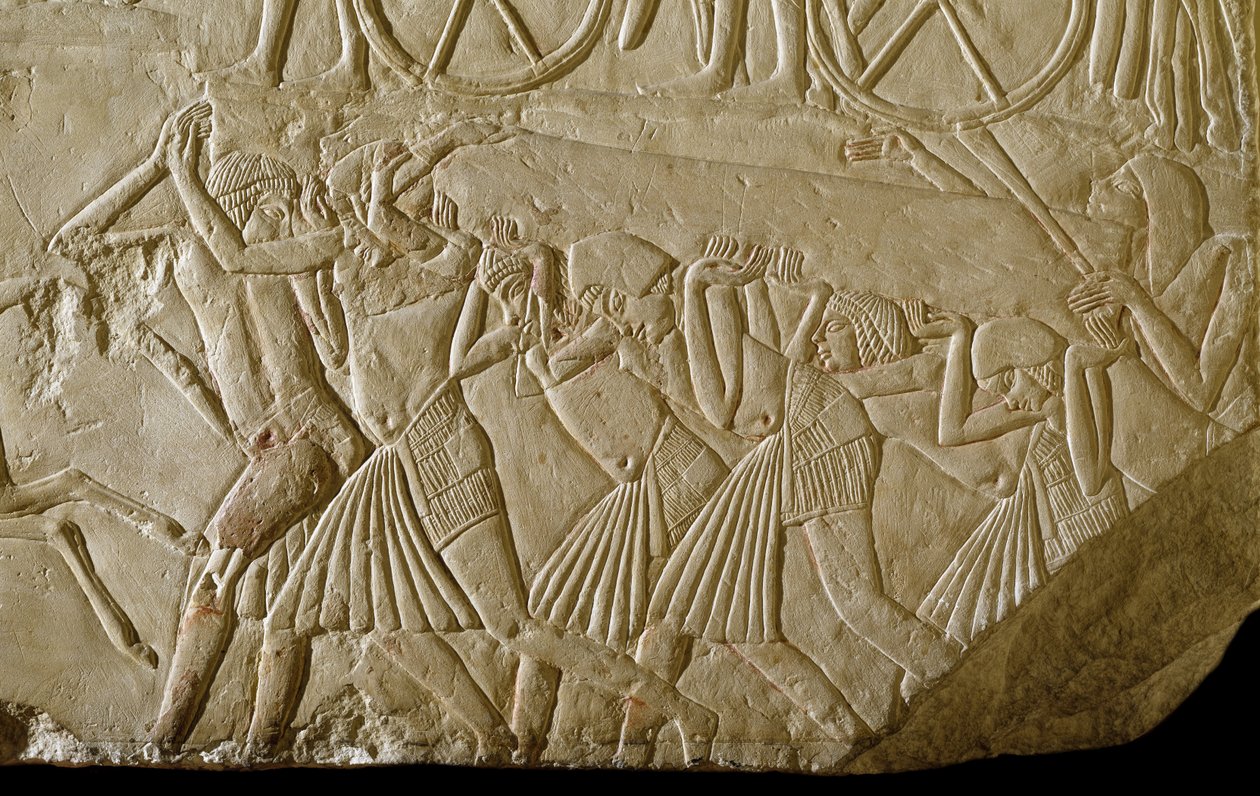
Adding a fascinating layer to the mystery of his burial is the existence of a completely different monument: The Saqqara Tomb. Long before he became pharaoh, while serving as the commander of the armed forces under Tutankhamun, Horemheb commissioned a magnificent private tomb for himself in the Memphite necropolis of Saqqara. This structure is a masterpiece of Amarna-transition art, featuring unparalleled limestone reliefs depicting his military triumphs and Asiatic prisoners of war.

The Dual Tombs: Having both a private tomb in Saqqara and a royal tomb in Thebes brilliantly illustrates Horemheb's dramatic rise to power. Today, the Saqqara tomb remains one of the most vital archaeological sources of post-Amarna military history.

When Horemheb ascended to the throne, he abandoned this private tomb in favor of KV57 in the Valley of the Kings. Interestingly, workers returned to the Saqqara tomb to add the royal uræus (the divine cobra) to the brows of his pre-existing depictions, updating his status from general to king. The Saqqara tomb was ultimately used for the burial of his first wife, Amenia, and later his second wife, Queen Mutnodjmet.

  • Location: Memphite necropolis of Saqqara.
  • Purpose: Commissioned as a private tomb before he became pharaoh.
  • Artistic Value: Features unparalleled limestone reliefs of military triumphs.
  • Final Use: Burial site for his wives, Amenia and Queen Mutnodjmet.

Amarna And Horemheb Skulls

Forensic scientific analysis of Amarna period skulls and Horemheb era remains

The absence of Horemheb's physical body deprives scientists of crucial forensic data that could illuminate the Amarna period's closing years. Recent DNA testing and CT scans performed on the skulls and mummies of the Amarna royal family—including Amenhotep III, Akhenaten, and Tutankhamun—have revolutionized our understanding of ancient genetics, revealing a family plagued by congenital defects due to severe inbreeding.

Genetic Significance: Locating Horemheb's remains would provide a crucial genetic outgroup to the highly inbred Amarna royal family, offering scientists a much-needed baseline for normal Egyptian physiological health during that era.

Finding Horemheb's mummy would provide a vital scientific contrast. Because he was of non-royal birth, analyzing his skull and skeleton would offer a baseline of physiological health for a high-status military man of the 14th century BCE. Forensic anthropologists could determine his age at death, investigate signs of battle trauma from his campaigns in Syria, and ascertain the exact cause of his demise.

  • Amarna Family Health: Plagued by congenital defects due to inbreeding.
  • Horemheb's Value: Provides a healthy, non-royal genetic baseline.
  • Potential Findings: Age at death, battle trauma, and exact cause of demise.
  • Current Status: Theoretical until his mummy is discovered.

Artifacts Of Horemheb Tomb

Ancient archaeological artifacts wooden statues and canopic jars from Horemheb tomb

Though his body was stolen, the thieves left behind a substantial amount of funerary equipment that gives us a glimpse into the wealth he took to the afterlife. When KV57 was cleared, archaeologists recovered several breathtaking archaeological artifacts. The most notable pieces were a series of wooden statues depicting various underworld deities, heavily coated in black resin. These figures were intended to guard the pharaoh during his journey through the treacherous hours of the night.

Material Wealth: The recovery of heavily gilded ritual couches and resin-coated deity statues proves that despite the post-Amarna economic strain, Horemheb's burial rivaled the splendor of his predecessor, Tutankhamun.

Among the debris, excavators also found the shattered remains of his alabaster canopic chest, carved with the faces of protective goddesses, which originally held his mummified internal organs. Fragments of beautifully carved wooden couches, similar to the animal-shaped beds found in Tutankhamun's tomb, were also recovered. These artifacts prove that Horemheb was buried with the full, staggering wealth expected of a triumphant Eighteenth Dynasty pharaoh.

  • Wooden Statues: Depicted underworld deities, coated in black resin.
  • Canopic Chest: Alabaster, carved with protective goddesses, found shattered.
  • Ritual Couches: Gilded wood fragments, similar to Tutankhamun's.
  • Significance: Indicates a burial rivaling the splendor of his predecessors.
Recovered Artifacts Material Current Condition / Location
Deity Statues Cedar wood coated in black resin Well preserved; housed in Cairo Museum.
Canopic Chest Egyptian Alabaster (Calcite) Shattered by looters; partially reconstructed.
Ritual Couches Gilded wood Highly fragmented; pieces recovered from tomb debris.
Rosettes & Amulets Faience and minor gold leaf Scattered across the floor; ignored by ancient thieves.

Discovered Pharaoh Mummy Caches

Secret mountain cachette discovered containing hidden ancient pharaoh mummies

Will we ever find the mummy of Horemheb? The science of Egyptology is constantly evolving. In the 21st century, the search for undiscovered pharaoh caches has shifted from manual digging to advanced geophysical surveys. Ground-penetrating radar, satellite imagery, and muon radiography are actively being deployed in the Valley of the Kings and the surrounding wadis to locate hidden voids in the bedrock.

Modern Exploration: Today, Egyptologists rely on non-invasive techniques like Muon Radiography—the exact same cosmic-ray technology recently used to discover a hidden corridor inside the Great Pyramid of Giza—to scan the Theban mountains for this elusive third cachette.

There remains a strong consensus among leading Egyptologists that a third major royal cachette exists. The high priests of the Twenty-First Dynasty were meticulous in their relocation efforts, and several prominent New Kingdom pharaohs—including Horemheb, Amenhotep IV (Akhenaten's true remains), and Ramses VIII—are still unaccounted for. It is highly probable that Horemheb's mummy rests securely in an unbreached limestone cleft, silently awaiting the day modern technology pierces the desert rock.

  • Modern Techniques: Ground-penetrating radar, satellite imagery, muon radiography.
  • Expert Consensus: Strong belief in a third major royal cachette.
  • Unaccounted Pharaohs: Horemheb, Amenhotep IV, Ramses VIII.
  • Future Hope: Advanced technology may finally reveal his hidden resting place.

Horemheb Temple: Explore The Great Architectural Legacy

Horemheb Temple: Explore The Great Architectural Legacy

Horemheb Temple: Explore The Great Architectural Legacy

Overview of the structural ruins and imposing stone columns of Horemheb temple projects

The architectural record of the late Eighteenth Dynasty is defined heavily by the systemic restructuring of state temples. Rather than focusing on a single isolated sanctuary, the pharaonic administration executed a coordinated national building program designed to physically reinstate orthodox theology across Egypt. This mandate required the massive expansion of existing religious precincts and the rapid construction of new ceremonial axes, specifically within the Theban region. The resulting temple architecture prioritized colossal scale and heavy sandstone masonry, employing monumental gateways to enforce a rigid spatial hierarchy. These deliberate engineering choices fundamentally altered the landscape of the Nile Valley, shifting focus back to the traditional priesthoods following decades of administrative neglect.

To achieve this unprecedented scale of construction within a single reign, state architects optimized their engineering methodologies. They implemented the systematic dismantling of preceding structures, repurposing thousands of stone blocks to rapidly fill the cores of new, massive pylons and enclosure walls. This structural efficiency allowed the administration to complete massive temple foundations, extensive colonnades, and fortified administrative complexes in a fraction of the standard construction time. The surviving temple architecture from this specific era provides a highly technical blueprint of New Kingdom engineering, showcasing precise stone cutting and the strict codification of ceremonial space that would dictate temple design for the subsequent Ramesside period.

Royal Mortuary Temple Location

Mudbrick enclosure walls and stone foundations of the royal mortuary temple at Medinet Habu

The primary mortuary temple complex is situated on the west bank of the Nile at Thebes, in the area now known as Medinet Habu. This specific geographic location was strategically selected for its proximity to the administrative centers of the western necropolis and its direct alignment with the Luxor Temple across the river. The complex was initially surrounded by a massive mudbrick enclosure wall, measuring approximately 150 meters in length and designed to secure the inner sacred precincts from unauthorized access. The architectural layout followed the strict, traditional linear axis, guiding the priesthood toward the dark, elevated inner sanctuary.

Architectural Fact: Mudbrick was utilized for massive enclosure walls not just for cost-efficiency, but for its exceptional thermal insulation and its ability to be rapidly mass-produced by vast teams of unskilled labor.

Excavations of the site have revealed an extensive network of administrative and economic buildings attached directly to the main temple structure. These included massive vaulted mudbrick granaries, dedicated slaughterhouses, and official bureaucratic offices required to manage the vast agricultural estates endowed to the temple. The floor plan indicates a highly complex operational center, demonstrating that this temple functioned not only as a religious monument but as a critical, fortified economic hub for the entire Theban west bank administration.

  • Location: Theban West Bank (modern Medinet Habu area).
  • Primary Function: Royal mortuary cult and regional economic hub.
  • Key Structures: Stone inner sanctuaries flanked by massive mudbrick granaries.
  • Design Layout: Strict linear axis enforcing spatial hierarchy.

Temple Of Ay Usurpation

Recarved stone cartouches and modified hieroglyphic inscriptions showing architectural usurpation

The physical construction of the aforementioned mortuary temple was not entirely original to this reign; it was a highly calculated act of architectural usurpation. The foundations and the initial core structures were originally commissioned by the preceding pharaoh, Ay. Upon assuming power, the new administration immediately ordered state masons to execute a comprehensive erasure of previous identities. This was a precise, legally mandated chiseling process where the royal cartouches of Ay were methodically smoothed down and aggressively over-carved with the new sovereign’s nomenclature, legally transferring the ownership of the monument.

Historical Context: "Damnatio memoriae" (the condemnation of memory) was a potent political weapon. By recarving Ay's cartouches, Horemheb literally usurped both the spiritual magic and the massive agricultural revenues attached to the temple estate.

This process of architectural appropriation extended to the monumental statuary situated within the temple courtyards. Colossal seated figures, originally carved to represent Tutankhamun and later claimed by Ay, were subjected to rigorous physical modifications. The artisans deepened the relief cuts around the facial features and entirely replaced the inscribed royal titulary on the thrones. By utilizing pre-carved stonework, the state was able to operationalize a functioning mortuary cult without a multi-year delay.

  • Original Builder: Pharaoh Ay (who had usurped it from Tutankhamun).
  • Usurpation Technique: Deep over-carving and smoothing of existing cartouches.
  • Modified Artifacts: Huge seated statues and main temple pylons.
  • Strategic Goal: Immediate acquisition of a functioning temple and its revenues.

Great Hypostyle Hall Foundations

Massive sandstone column bases and structural grid of the Great Hypostyle Hall foundations

One of the most consequential engineering projects initiated during this period was the foundational groundwork for the Great Hypostyle Hall at the Karnak Temple Complex. Covering an area of over 5,000 square meters, the structural requirements for this hall were unprecedented. The architects designed a dense grid of 134 massive columns to support the stone roof. To ensure absolute structural stability against the shifting alluvial soil, the builders excavated deep sand-filled foundation trenches.

Engineering Marvel: The sand-filled foundation trenches acted as an ancient seismic damper. This brilliant structural technique absorbed ground vibrations and prevented the multi-ton columns from cracking under their own vertical weight.

The initiation of the central nave involved the erection of twelve colossal columns, each measuring over 21 meters in height with a diameter of roughly 3.6 meters. These specific pillars were topped with open-papyrus capitals, mathematically proportioned to bear the extreme load of the central architraves. The architectural blueprints drafted explicitly established the rigid internal spacing and the precise vertical elevations. Although the decorative carving was completed later, the unyielding structural parameters were directly executed by the engineers of this specific era.

  • Total Scale: Over 5,000 sq meters containing 134 stone columns.
  • Central Columns: 21 meters high, topped with open-papyrus capitals.
  • Foundation Tech: Deep sand-filled trenches for seismic shock absorption.
  • Legacy: Remained structurally intact against annual Nile floods for millennia.

Second Pylon At Karnak

The imposing stone facade of the Second Pylon forming the main temple gateway

To properly enclose the western facade of the newly planned Great Hypostyle Hall, construction commenced on the monumental Second Pylon at Karnak. This massive architectural gateway consists of two towering stone massifs flanking a central portal. The pylon measures approximately 98 meters in width and was designed to reach a height of nearly 30 meters, making it one of the most formidable structural barriers in the entire Karnak complex.

Theological Architecture: Pylons were the fortified gateways to the divine. Their sloped exterior walls mimic the hieroglyph for 'horizon' (Akhet), symbolizing the exact point where the sun god rises into the mortal world.

The primary function of the Second Pylon was strictly regulatory; it served as a definitive architectural boundary separating the accessible outer courtyards from the highly restricted, sacred darkness of the hypostyle interior. The central gateway was originally fitted with massive cedar wood doors, imported directly from the Levant and sheathed in beaten bronze. The sheer thickness of the walls allowed for the inclusion of internal stone staircases, granting the priesthood access to the roof for astronomical observations.

  • Dimensions: Roughly 98 meters wide and 30 meters high.
  • Materials: Dressed Nubian sandstone blocks and imported cedar wood doors.
  • Structural Features: Hidden internal staircases for roof access.
  • Function: The primary regulatory gateway protecting the Hypostyle Hall.

Ninth And Tenth Pylons

Ruins of the Ninth and Tenth Pylons along the southern processional axis

Simultaneous to the western expansions, a massive engineering effort was directed toward the southern processional axis of Karnak. The construction of the Ninth and Tenth Pylons fundamentally reorganized the spatial relationship between the main Precinct of Amun and the southern Temple of Mut. These two massive structures created an enclosed, heavily fortified courtyard that strictly controlled the flow of religious processions. The Tenth Pylon functioned as the ultimate southern terminus of the Karnak complex during this era.

Urban Planning: The southern architectural expansion at Karnak was state-mandated urban planning, deliberately dictating the exact routes the population and the priesthood could use during the massive Opet festival.

The construction required the displacement of enormous volumes of earth and stone. The foundations were laid deep into the water table, utilizing massive, roughly hewn blocks. Between the Ninth and Tenth Pylons, architects designed dedicated sanctuaries and way-stations intended to house the sacred barques during major religious festivals. This expansion permanently cemented the ritual pathway, effectively transforming the surrounding urban geography of Thebes.

  • Location: The primary southern processional axis of Karnak.
  • Purpose: Connecting the Amun Precinct to the Temple of Mut.
  • Architectural Impact: Created highly secure, enclosed ritual courtyards.
  • Additions: Included internal way-stations for sacred barque rests.

Architectural Talatat Blocks Utilization

Exposed talatat blocks reused as structural core fill inside dismantled temple walls

The rapid construction of the pylons was facilitated by an extraordinary feat of structural recycling. To acquire the massive volume of core material required to fill the interiors of these hollow pylons, state engineers ordered the total demolition of the Atenist temples located in East Karnak. These dismantled structures were built using standardized, small-scale sandstone bricks known as 'talatat'. Tens of thousands of these specific blocks were meticulously packed as internal structural rubble within the towering walls of the new monuments.

Irony of Preservation: The intent was to destroy Akhenaten's legacy by burying it inside heavy walls. Instead, the dark, dry cores of the pylons acted as perfect time capsules, flawlessly preserving the Amarna reliefs from wind and erosion for millennia.

This engineering decision was driven primarily by logistical efficiency. The small, uniformly sized talatat blocks were easily carried by individual laborers, drastically accelerating the internal filling process without requiring heavy lifting machinery or complex ramps. By encasing these carved blocks deep within the dark, oxygen-deprived interiors, the state architects inadvertently provided optimal preservation conditions for the art they meant to hide.

  • Source Material: Dismantled Atenist temples from East Karnak.
  • Block Dimensions: Standardized 'talatat' measuring ~27x27x54 cm.
  • Engineering Benefit: Allowed rapid, manual core-filling without heavy machinery.
  • Archaeological Result: Perfect preservation of thousands of Amarna-era reliefs.

Gebel Silsila Rock Temple

Rock cut facade of the Speos sanctuary carved into the Gebel Silsila sandstone cliffs

Beyond the centralized administration of Thebes, significant temple construction occurred at the massive sandstone quarries of Gebel el-Silsila. Here, engineers excavated a monumental rock-cut temple, technically classified as a 'speos', directly into the western cliffs overlooking the Nile. This specific architectural format required highly specialized stonecutters who worked horizontally into the living bedrock. The floor plan features a vaulted transverse gallery supported by massive pillars left completely intact during excavation, leading to a deep inner sanctuary.

Resource Control: A temple carved directly into the quarry served as a divine military checkpoint. It ensured the pharaoh maintained absolute ideological and bureaucratic control over Egypt's most vital construction resource: sandstone.

The Speos served a dual function: it was a religious sanctuary dedicated to Amun, Mut, Khonsu, and the local crocodile deity Sobek, but it also operated as an intimidating administrative marker. The exterior rock face and the internal gallery walls were deeply inscribed with detailed military ledgers and triumphant reliefs, ensuring that all quarry labor and river traffic moving through the narrow gorge were constantly subjected to the overarching authority of the pharaonic administration.

  • Temple Format: A 'Speos' (rock-cut sanctuary carved into bedrock).
  • Location: The vital sandstone quarries of Gebel el-Silsila.
  • Key Deities: Amun, Mut, Khonsu, and the crocodile god Sobek.
  • Strategic Purpose: Asserting divine authority over the state stone supply chain.

Luxor Avenue Of Sphinxes

Rows of ram headed sphinxes aligning the paved ceremonial avenue connecting temples

To physically unite the distinct religious precincts of the Theban area, major infrastructural additions were made to the ceremonial processional routes, most notably the Avenue of Sphinxes. This monumental paved road, measuring nearly three kilometers in total length, was designed to seamlessly connect the southern gateways of Karnak Temple directly to the Luxor Temple complex. During this specific era, the state commissioned the carving and installation of numerous monolithic sandstone sphinxes to line precise segments of this sacred dromos.

Theological Alignment: The ram-headed sphinx represents the ultimate fusion. It combines the supreme state god Amun (the ram) with the invincible, raw power of the Pharaoh (the lion's body), physically guarding the 3-kilometer sacred pathway.

The sphinxes produced during this period adhere strictly to the traditional orthodox canon. They feature the body of a recumbent lion surmounted by the head of a ram. Each statue was carved from a single block of high-grade sandstone and rested upon a standardized, rectangular stone plinth. The precise spatial alignment of these massive statues required advanced surveying techniques, ensuring the avenue maintained a perfectly linear trajectory across the uneven topography of the ancient floodplain.

  • Total Length: Nearly 3 kilometers connecting Karnak and Luxor.
  • Statue Design: Monolithic recumbent lions with the heads of rams (Criosphinx).
  • Engineering Feat: Perfect linear alignment across the uneven floodplain.
  • Ritual Purpose: Guarding the sacred barques during the annual Opet Festival.

Great Legal Edict Stela

Massive stone stela covered in deep hieroglyphic legal texts standing at Karnak

Temple architecture in ancient Egypt also functioned as the primary medium for state communication and legal publishing. The most significant example of this is the Great Legal Edict, a monumental stone stela erected prominently at the base of the Tenth Pylon. Carved from a massive slab of imported hard stone, the stela reaches nearly five meters in height. Its surface is entirely covered in deeply incised, meticulously aligned hieroglyphic columns detailing sweeping administrative reforms, tax regulations, and strict penalties for bureaucratic corruption.

Legal Permanence: In an era before mass literacy, carving the law into a massive 5-meter stone stela at the nation's most important temple physically made the pharaoh's law synonymous with the unyielding, eternal will of the gods.

The sheer physical weight and immobility of the stela were deliberate architectural choices meant to convey the absolute permanence of the newly established legal code. By physically embedding the state law directly into the architectural fabric of the nation's most powerful religious institution, the administration successfully fused legal authority with divine mandate. The deep carving technique ensured that the bureaucratic mandates remained legible despite intense sun exposure, standing as an uncompromising monument to absolute order.

  • Dimensions: Massive hard stone slab reaching nearly 5 meters in height.
  • Location: Prominently displayed at the base of the Tenth Pylon at Karnak.
  • Content: Sweeping state administrative reforms, tax laws, and anti-corruption penalties.
  • Technique: Deeply incised hieroglyphs designed to withstand severe weather erosion.

Who is Horemheb? Everything You Need to Know About the Pharaoh

Horemheb: The Pharaoh Who Restored Egypt's Order

Granite statue of Pharaoh Horemheb wearing the nemes headdress

The history of Ancient Egypt is frequently dominated by names that echo through popular culture: Ramesses the Great, King Tutankhamun, and the controversial heretic pharaoh, Akhenaten. However, the survival of the Egyptian empire following the catastrophic internal disruptions of the Amarna Period rests almost entirely upon the shoulders of a man who was never born to be king. Horemheb was the final pharaoh of the Eighteenth Dynasty, reigning from approximately 1319 BC to 1292 BC. His reign represents one of the most critical turning points in antiquity, bridging the gap between the diplomatic failures of the Amarna kings and the military supremacy of the subsequent Ramesside period.

Unlike his immediate predecessors, Horemheb did not possess royal blood. He ascended to the pinnacle of Egyptian power through unparalleled competence on the battlefield and shrewd political maneuvering within the royal courts of three different pharaohs. By the time he claimed the double crown, the Egyptian state was suffering from severe administrative corruption, a depleted treasury, and significantly diminished influence over its vassal states in the Levant. This historical analysis explores the life and legacy of Horemheb, the commoner who became the architect of Egypt's restoration.

Early Egyptian Military Career

Ancient Egyptian temple wall reliefs showing military commanders and soldiers

Horemheb's origins lie entirely outside the traditional spheres of royal lineage. He was born in the provincial town of Hnes, known to the Greeks as Herakleopolis Magna, located on the western edge of the Nile Valley near the Fayyum region. Historical records suggest his family was of minor provincial nobility, but they held no significant influence in the imperial capital of Thebes. Recognizing that the military offered the most viable path to socio-political advancement, Horemheb enlisted in the armed forces, beginning his career during the early reign of Akhenaten.

Historical Insight: In the highly stratified society of Ancient Egypt, the military was one of the very few avenues where a man of provincial, non-royal birth could rise to absolute power purely through merit and strategic genius.

During Akhenaten's reign, the Egyptian court relocated to the isolated desert city of Akhetaten (Amarna), and the pharaoh became completely consumed by his monotheistic devotion. While the king composed hymns, Egypt's northern borders were rapidly deteriorating. The increasingly aggressive Hittite Empire, under the command of Suppiluliuma I, began systematically conquering Egyptian vassal states in Syria and the Levant. Horemheb distinguished himself in these escalating border conflicts.

By the conclusion of the Amarna period, Horemheb had risen to the extraordinary rank of "Great Commander of the Army." He became the paramount military authority in the land, responsible for attempting to hold the fragmented northern frontier against overwhelming Hittite incursions. Reliefs from his early, pre-royal tomb at Saqqara depict him strictly commanding foreign captives, demonstrating his vital role in preserving the empire's integrity.

  • Origin: Herakleopolis Magna (Hnes), of non-royal provincial nobility.
  • Era of Service: Began military service under Akhenaten during the Amarna Period.
  • Primary Adversary: The expanding Hittite Empire under Suppiluliuma I.
  • Highest Rank: Great Commander of the Army (pre-pharaoh).

Service Under King Tutankhamun

Statue of young Tutankhamun standing next to the god Amun

Following the death of Akhenaten and the brief reigns of his immediate successors, the throne passed to a boy of eight or nine years old: Tutankhaten, who promptly changed his name to Tutankhamun. Because the new pharaoh was merely a child, the actual governance of the Egyptian empire fell into the hands of two immensely powerful commoners. The first was Ay, the elderly vizier, and the second was Horemheb, the Commander-in-Chief.

Geopolitical Maneuver: As Deputy of the King, Horemheb functioned as the true power behind the throne. His aggressive campaigns into the Levant were vital efforts to signal to the Hittites that Egypt, despite having a child pharaoh, was no longer vulnerable.

Under Tutankhamun, Horemheb's influence became absolute. He was granted the unprecedented title of "Idnw" or Deputy of the King. In this capacity, he functioned as the de facto regent for all domestic security and foreign policy. Horemheb spearheaded a massive diplomatic and military initiative to reverse the neglect of the Amarna era. He personally led campaigns into the Levant, attempting to recapture strategic cities such as Kadesh and Amurru, successfully stabilizing the frontier.

A crucial moment occurred upon the unexpected death of young Tutankhamun. The boy king left no living heirs. Tutankhamun's widow, Ankhesenamun, wrote to the Hittite King begging for a prince to marry. The prince, Zannanza, was dispatched, but he was assassinated en route. Many historians strongly suspect that Horemheb orchestrated the assassination. As a staunch traditionalist, he would never have permitted a foreign enemy to sit upon the throne of Osiris. While Horemheb managed the military fallout at the northern border, Ay seized the throne.

  • Role Under Tutankhamun: "Idnw" (Deputy of the King) and de facto regent.
  • Military Focus: Recapturing Kadesh and Amurru to stabilize the Levantine borders.
  • Succession Crisis: Suspected of assassinating Hittite Prince Zannanza to protect the throne.

Ascension To Egyptian Throne

Ancient Egyptian coronation ceremony depicted in carved stone relief

Ay's reign was predictably short, lasting merely four years. Upon his death, Horemheb was perfectly positioned to take the crown. He commanded the absolute loyalty of the military, and he had the backing of the orthodox priesthood of Amun, who viewed him as the ultimate restorer of traditional religious order. To legitimize his claim to the throne, which lacked any royal bloodline justification, Horemheb engineered a brilliant theological narrative.

Divine Propaganda: Lacking royal blood, Horemheb utilized the "Divine Oracle" during the Opet Festival. By having the statue of Amun physically 'nod' in his direction, he legally and spiritually bypassed the need for a royal pedigree.

He claimed that the local god of his hometown, Horus of Hnes, had chosen him for kingship and personally presented him to the supreme state god, Amun, during the Opet Festival in Thebes. Amun reportedly signaled divine approval through a prophetic oracle, cementing Horemheb's divine right to rule. To further solidify his legitimacy, Horemheb married a noblewoman named Mutnedjmet. Egyptological consensus strongly suggests she was the sister of Nefertiti, tethering him to the established royal house.

  • Predecessor: Pharaoh Ay (ruled for ~4 years).
  • Legitimization Strategy: Divine oracle endorsement during the Theban Opet Festival.
  • Royal Marriage: Married Mutnedjmet (likely Nefertiti's sister) to secure royal ties.

The Great Legal Reforms

The Great Edict of Horemheb carved on a massive stone stele

Horemheb inherited a nation plagued by systemic corruption. During the Amarna period, the breakdown of traditional bureaucratic oversight allowed local officials and military personnel to exploit the peasantry and middle classes without fear of consequence. Recognizing that military strength abroad meant nothing without domestic stability, the new pharaoh initiated a sweeping series of administrative overhauls collectively known today as the Great Edict of Horemheb.

Legal Philosophy: The Great Edict is a rare glimpse into ancient social justice. Horemheb specifically designed laws not to protect the elite, but to shield the working-class farmers from state-sanctioned extortion and military abuse.

Inscribed on a massive stone stele erected at the base of the Tenth Pylon at Karnak Temple, the Edict explicitly targets the abuses of state power. The text details severe penalties for soldiers and officials caught stealing hides, requisitioning boats unlawfully, or extorting crops. Horemheb did not rely on fines; his justice was absolute. Officials found guilty of severe corruption faced facial mutilation—specifically, the severing of their noses—followed by permanent exile to the desolate border fortress of Tjaru.

Furthermore, Horemheb completely restructured the Egyptian judiciary. He appointed entirely new benches of judges and magistrates in both Upper and Lower Egypt, carefully selecting men of high moral standing from the military and traditional priesthoods, ensuring they were paid adequately by the state to prevent bribery.

Administrative Reform Targeted Abuse Mandated Penalty (The Great Edict)
Military Extortion Soldiers stealing goods or labor from local farmers Removal of the nose and exile to Tjaru (Sile)
Judicial Corruption Judges accepting bribes to skew legal rulings Capital punishment (Death penalty)
Tax Collection Abuse Requisitioning private boats under false state pretenses Severe beatings and confiscation of property
Palace Administration Embezzlement from the royal treasury and storehouses Immediate dismissal, restitution, and physical punishment

Erasure Of Amarna Period

Defaced ancient Egyptian hieroglyphs on a ruined temple wall

Horemheb was a staunch traditionalist who viewed Akhenaten's monotheistic experiment not merely as a religious misstep, but as a period of profound national trauma that had deeply offended the traditional pantheon. To rectify this, Horemheb launched a ruthless, state-sponsored campaign of Damnatio Memoriae (condemnation of memory) against the Amarna kings. He did not simply want to undo their work; he sought to entirely eradicate their existence from the historical record.

Theological Erasure: In ancient Egyptian belief, destroying a person's name on Earth effectively destroyed their soul in the afterlife. Horemheb's systematic chiseling of Akhenaten's cartouches was considered an act of spiritual execution.

He dispatched demolition crews to Akhetaten (Amarna), ordering the systematic dismantling of the sun temples and royal palaces. The standard building blocks of the Amarna period, known as "talatat," were transported back to Thebes and unceremoniously used as hidden core fill for Horemheb's own monumental building projects at Karnak. Furthermore, he ordered the names of Akhenaten, Smenkhkare, Tutankhamun, and Ay to be systematically chiseled off public monuments and king lists. He usurped many of Tutankhamun's statues, re-carving the royal cartouches to display his own name.

  • Target: The entire legacy of the Amarna Pharaohs (Akhenaten, Tutankhamun, Ay).
  • Method: 'Damnatio Memoriae' (systematic chiseling of names and faces).
  • Recycling: Amarna 'talatat' blocks were used as hidden rubble in Karnak's pylons.
  • Usurpation: Re-carved his own name over Tutankhamun's statues to claim them.

Egyptian Architectural Legacy Monuments

Massive columns of Karnak Temple complex reaching into the sky

With internal order restored and the economy restabilized through his strict administrative policies, Horemheb turned his attention to monumental construction. He became one of the most prolific builders of his era, concentrating his efforts heavily on the Karnak Temple complex in Thebes. He initiated the construction of the massive Second, Ninth, and Tenth Pylons. He also laid the foundation and began construction on the Great Hypostyle Hall, a breathtaking forest of colossal stone columns that would later be completed by his successors.

Tomb Evolution: Horemheb is unique for having two distinct, highly developed tombs: a private noble's tomb in Saqqara showcasing his military life, and a Royal Tomb in the Valley of the Kings (KV57) built after his coronation.

When he ascended to the throne, he abandoned his Saqqara tomb and commissioned a royal burial site in the Valley of the Kings, known today as KV57. This tomb marks a significant architectural evolution. It was the first royal tomb to utilize a straight-axis floor plan, departing from the bent-axis design of earlier tombs. Furthermore, it features the first known depiction of the "Book of Gates," a complex funerary text guiding the pharaoh through the underworld.

  • Primary Focus: Karnak Temple Complex (Thebes).
  • Major Additions: Second, Ninth, and Tenth Pylons; Foundations of Hypostyle Hall.
  • Royal Tomb: KV57 in the Valley of the Kings (Straight-axis design).
  • Funerary Innovation: First royal tomb to feature the 'Book of Gates'.

Succession And Nineteenth Dynasty

Ancient Egyptian pharaoh handing symbol of power to successor

Despite his long and highly successful reign, Horemheb faced one critical failure: he was unable to produce a living male heir. His Great Royal Wife, Mutnedjmet, appears to have died in childbirth late in his reign, her remains found with the bones of a fetus in the abandoned Saqqara tomb. Recognizing that his death without a clear successor would plunge Egypt right back into the chaos he had spent his life extinguishing, Horemheb made a pragmatic and historically monumental decision.

Dynastic Shift: By choosing a general with a living son and grandson over a royal courtier, Horemheb prioritized the structural stability of the state over pure bloodlines, effectively gifting Egypt its greatest upcoming dynasty.

He bypassed the traditional royal court and looked to the institution that had defined his own life: the military. Horemheb elevated his closest confidant, an aging military commander and vizier from the Nile Delta named Paramessu, to the position of Crown Prince. Paramessu had a crucial advantage: he already had a son (the future Seti I) and a grandson (the future Ramesses II), guaranteeing a stable, multi-generational line of succession. Upon Horemheb's death, Paramessu ascended the throne as Ramesses I, officially founding the illustrious Nineteenth Dynasty.

  • Military Strategist: Held the northern borders against the Hittite empire during extreme weakness.
  • Legal Reformer: Authored the Great Edict to eliminate bureaucratic corruption.
  • Religious Traditionalist: Dismantled the Atenist heresy and restored the Amun priesthood.
  • Dynastic Founder: Secured Egypt's future by appointing Paramessu (Ramesses I), founding the 19th Dynasty.

Horemheb's legacy is defined by rigorous discipline and unwavering dedication to the Egyptian state. He did not inherit an empire; he inherited a catastrophe. Through sheer force of will, military genius, and uncompromising legal reform, he dragged Egypt back from the precipice of collapse. The spectacular monuments of Ramesses the Great and the wealth of the Nineteenth Dynasty would never have materialized without the foundational stabilization achieved by Horemheb, the general who saved the world's greatest ancient civilization.

Prince Mohamed Ali Palace in Manial: A Historic, Cultural, and Tourist Guide

Prince Mohamed Ali Palace in Manial: A Historic, & Tourist Guide

Prince Mohamed Ali Palace in Manial with historic Islamic architecture and royal gardens in Cairo

An overview of the Manial Palace

Prince Mohamed Ali Palace, also known as Manial Palace, is one of Cairo’s most valuable royal landmarks. It stands on Al-Roda Island in the Manial district, close to the Nile, and offers visitors a clear view of Egypt’s modern royal history. The palace is not only a beautiful building; it is a complete museum complex that shows how art, architecture, education, and royal life came together in early twentieth-century Egypt.

The palace was built by Prince Mohamed Ali Tawfik, a member of Egypt’s ruling family and the son of Khedive Tawfik. Construction took place mainly between 1900 and 1929. The prince designed the palace to be a private residence, a cultural collection, and a future museum. For this reason, every hall, garden, ceiling, door, and object was chosen with care. Today, the palace helps visitors understand the taste of the royal family, the importance of Islamic art, and the link between Egypt and other artistic traditions.

The palace is especially important because it combines several styles in one place. Visitors can see Ottoman, Mamluk, Persian, Andalusian, Moroccan, Syrian, and European influences. This mixture does not feel random. It reflects the prince’s goal: to create a living school of Islamic and royal art. The result is a quiet, elegant site that is different from the crowded museums and ancient temples usually visited in Cairo.

History of Manial Palace

Historic exterior of Manial Palace showing royal Islamic architectural details in Cairo

The history of Manial Palace begins with the personality of Prince Mohamed Ali Tawfik. He was born in 1875 and belonged to the Muhammad Ali dynasty, the family that ruled Egypt from the nineteenth century until the 1952 Revolution. Although he never became king, he was close to the throne and served important political roles during his lifetime. He was also known for his interest in Islamic heritage, rare objects, gardens, manuscripts, weapons, carpets, and decorative arts.

The prince chose Al-Roda Island because it was calm, green, and connected to the Nile. At the time, Manial was not as crowded as central Cairo. It allowed him to build a palace surrounded by gardens, walls, and separate buildings. The palace was planned as a private world. It included reception areas, living rooms, a mosque, a throne hall, a private museum, a hunting museum, a clock tower, and landscaped gardens.

One of the most important points in the palace’s history is that the prince wanted it to become a museum after his death. This makes Manial Palace different from many royal homes. It was not turned into a museum by chance. It was prepared for that purpose from the beginning. The palace therefore keeps much of its original meaning: it is a royal residence, but also an educational space made to preserve culture.

Why the Palace Matters

  • It presents the lifestyle of Egypt’s royal family before 1952.
  • It preserves rare examples of Islamic decorative art.
  • It shows the personal taste of Prince Mohamed Ali Tawfik.
  • It combines architecture, gardens, furniture, manuscripts, weapons, and textiles.
  • It is one of Cairo’s best places for cultural tourism and photography.

Architecture and Palace Design

Islamic architecture of Manial Palace with arches, tiles, woodwork, and carved decoration

The architecture of Manial Palace is the main reason many visitors remember it. The palace does not follow one single style. Instead, it brings together several historic traditions in a balanced way. The outer walls and gates give the feeling of a protected royal estate. Inside, the buildings are decorated with geometric patterns, colored tiles, wooden ceilings, marble details, stained glass, and Arabic calligraphy.

The palace design is based on separate buildings rather than one large block. This gives visitors a sense of moving through different chapters of the prince’s life. Each building has its own role. The reception palace was used for guests. The residence palace was used for daily life. The throne palace presented royal authority. The mosque reflected faith and traditional craftsmanship. The private museum displayed collections. The gardens connected everything together.

The decoration is rich but still organized. Walls are covered with tiles, ceilings are painted and carved, and doors include fine woodwork. Many rooms use mashrabiya screens, giving both privacy and beauty. The palace also uses light carefully. Windows, colored glass, and open spaces allow sunlight to enter softly, making the colors of the tiles and wood stand out.

Architectural Element Main Style What Visitors Notice
Arches Islamic and Andalusian Elegant entrances and repeated curved forms
Tiles Ottoman and Syrian Bright colors, floral patterns, and wall decoration
Woodwork Mamluk and Ottoman Carved ceilings, doors, screens, and furniture
Gardens Persian and English influence Rare trees, quiet paths, and palace views

Reception Palace and Halls

Reception Palace halls in Manial Palace with decorated ceilings, royal seating, and Islamic ornaments

The Reception Palace was designed to welcome official guests and important visitors. It reflects the social side of royal life. The rooms are formal, carefully arranged, and full of detail. Visitors can see how the prince used architecture to show respect, status, and hospitality. The halls include decorated ceilings, fine carpets, wooden furniture, mirrors, lamps, and walls covered with art.

This part of the palace is useful for understanding how royal meetings were organized. The layout moves guests from one space to another in a planned order. The decoration becomes more impressive as visitors move inside. This was a common idea in palace design: the building itself prepared the guest for the importance of the owner.

The Reception Palace also shows the prince’s love for detailed craftsmanship. Nothing appears plain. Even the smaller parts, such as door frames, window screens, and ceiling borders, were treated as art. For tourists, this area is one of the best places to study Islamic decorative forms without needing advanced knowledge of art history.

Residence Palace and Daily Life

Residence Palace rooms showing royal furniture, private living spaces, and decorative Islamic interiors

The Residence Palace shows the private side of Prince Mohamed Ali’s life. These rooms were used for living, resting, reading, and receiving close guests. Unlike the main reception areas, the residence feels more personal. It includes furniture, bedrooms, sitting rooms, and objects that help visitors imagine the daily routine of a royal prince in Cairo.

The rooms combine comfort with decoration. Chairs, tables, cabinets, and beds are not only practical; they are also artistic objects. Many pieces show mother-of-pearl inlay, carved wood, fine textiles, and metal details. The residence is important because it proves that the palace was not built only for public display. It was a real home, made for a person who lived among his collections.

Visitors should look carefully at the ceilings in this section. Many ceilings are painted or carved with repeated patterns. These patterns are part of the educational value of the palace. They show how Islamic art often uses rhythm, geometry, and balance rather than empty decoration. The result is a peaceful interior that feels rich without being chaotic.

Throne Palace and Royal Symbolism

Throne Palace in Manial Palace with royal chairs, golden details, portraits, and formal decoration

The Throne Palace is one of the most impressive areas in the complex. It was not a working royal court in the same way as Abdeen Palace, but it used royal symbols to express rank, history, and family identity. The hall includes formal seating, portraits, gold-colored decoration, and a ceremonial atmosphere. It reminds visitors that Prince Mohamed Ali was part of the ruling family and close to the line of succession.

This hall is important for understanding the political meaning of the palace. The prince was not simply a collector. He was a royal figure who understood the power of symbols. Portraits, thrones, carpets, and formal arrangements all helped present the dynasty as cultured, stable, and connected to Egypt’s past.

For tourists, the Throne Palace is also one of the most photographed spaces. The red seating, bright chandeliers, mirrors, and ceiling details create a strong visual effect. However, the educational value is more important than the image. The hall teaches how royal families used interior design to communicate authority without using words.

Manial Palace is not only a royal house; it is a complete lesson in taste, power, art, and memory.

Private Museum and Collections

Private Museum at Manial Palace displaying rare manuscripts, carpets, weapons, textiles, and royal objects

The Private Museum is one of the most valuable parts of Manial Palace. It contains many of the objects collected by Prince Mohamed Ali. These collections include manuscripts, carpets, weapons, textiles, glass, porcelain, metalwork, writing tools, personal objects, paintings, and gifts. The museum helps visitors understand the prince as a collector, not only as a palace owner.

The collections are educational because they show different materials and artistic skills. A visitor can compare the softness of textiles with the strength of metal weapons, or the fine detail of manuscripts with the bright surface of porcelain. This variety makes the museum useful for students, artists, historians, and general travelers.

Recent development work has focused on improving the display of these objects. The updated museum plan gives more attention to classification, lighting, security, restoration, and visitor understanding. The idea is to present the collections in clear groups, such as jewelry, manuscripts, carpets, weapons, glass, porcelain, paintings, and personal belongings. This makes the visit easier and more useful.

Collection Type Examples Educational Value
Manuscripts Religious texts, calligraphy, and written works Shows Arabic writing, book arts, and learning traditions
Carpets Rare woven carpets from different artistic schools Explains textile design, color, and pattern
Weapons Swords, daggers, firearms, and decorated arms Connects art with status, protection, and ceremony
Porcelain and Glass Cups, plates, vases, and decorative objects Shows trade, taste, and daily luxury
Personal Objects Royal gifts, writing tools, and private belongings Brings the prince’s personal life closer to visitors

Mosque, Clock Tower, and Gardens

Manial Palace mosque, clock tower, and gardens surrounded by rare plants and historic architecture

The mosque inside the palace complex is small compared with Cairo’s famous historic mosques, but it is rich in detail. It reflects the prince’s interest in religious architecture and Islamic decoration. The mosque includes beautiful tiles, carved elements, and a calm atmosphere. It is an important reminder that the palace was planned as a complete cultural environment, not only as a residence.

The clock tower is another important feature. It adds a different character to the palace and shows the influence of modern royal architecture. Its form is distinctive and helps visitors recognize the palace from outside. Together with the entrance, walls, and mosque, the tower gives the complex a strong identity.

The gardens are among the most pleasant parts of the visit. Prince Mohamed Ali collected rare plants and trees, creating a green space that still gives the palace much of its beauty. The gardens soften the heavy decoration of the buildings and allow visitors to rest between halls. They also make the palace suitable for slow cultural tourism, where the visitor moves calmly and observes details.

What to Notice in the Gardens

  • The relationship between trees, paths, and palace buildings.
  • The way greenery frames the mosque, tower, and halls.
  • The quiet atmosphere compared with the busy streets of Cairo.
  • The rare plant collections connected to the prince’s personal taste.

Visitor Guide and Practical Tips

Visitors walking through Manial Palace museum halls and gardens during a cultural tour in Cairo

Manial Palace is a strong choice for travelers who want to see a quieter side of Cairo. It is suitable for history lovers, architecture students, families, photographers, and anyone interested in royal life. The visit usually takes between one and two hours, but visitors who enjoy details may need more time. The palace is best visited in the morning, when the light is good and the gardens are comfortable.

Visitors should move slowly through the rooms. The palace is full of small details, and a quick visit can miss much of its value. Look at the ceilings, floors, doors, windows, lamps, and furniture. The palace teaches through details. Even a small chair or tile may explain something about royal taste, imported materials, or local craftsmanship.

Photography rules may change depending on museum policy, so visitors should check at the entrance before taking pictures. It is also better to avoid touching walls, furniture, or display cases. These objects are historic and need careful protection. For students and researchers, the palace is a useful place to study Islamic revival architecture in modern Egypt.

Visit Point Recommendation
Best Time Morning or early afternoon for better light and a calmer visit
Visit Duration Plan at least 90 minutes to see the main halls and gardens
Best For Architecture, royal history, Islamic art, photography, and education
Main Highlights Reception Palace, Residence Palace, Throne Palace, Private Museum, Mosque, Clock Tower, and Gardens
Visitor Tip Do not rush. The value of Manial Palace is in its details.

Conclusion: A Living Royal Museum

Prince Mohamed Ali Palace in Manial is one of Cairo’s most important historic houses. It is not only a palace and not only a museum. It is a complete cultural record of a prince who loved art, architecture, gardens, and collecting. The palace explains a period of Egyptian history when royal life, Islamic heritage, and modern museum thinking met in one place.

The strongest feature of the palace is its balance. It has beauty, but it also has knowledge. It has luxury, but it also has personal meaning. It has royal symbols, but it also teaches visitors about materials, styles, and craftsmanship. From the Throne Palace to the private museum, and from the mosque to the gardens, every part of the site adds something to the story.

For anyone visiting Cairo, Manial Palace is worth serious attention. It gives a different experience from ancient monuments and crowded museums. It is calm, detailed, and deeply connected to Egypt’s modern heritage. A visit to this palace is a visit to a royal mind, a historic home, and one of the finest examples of Islamic-inspired architecture in modern Egypt.

Pages